


Introduction: Setting the Stage for the Debate:
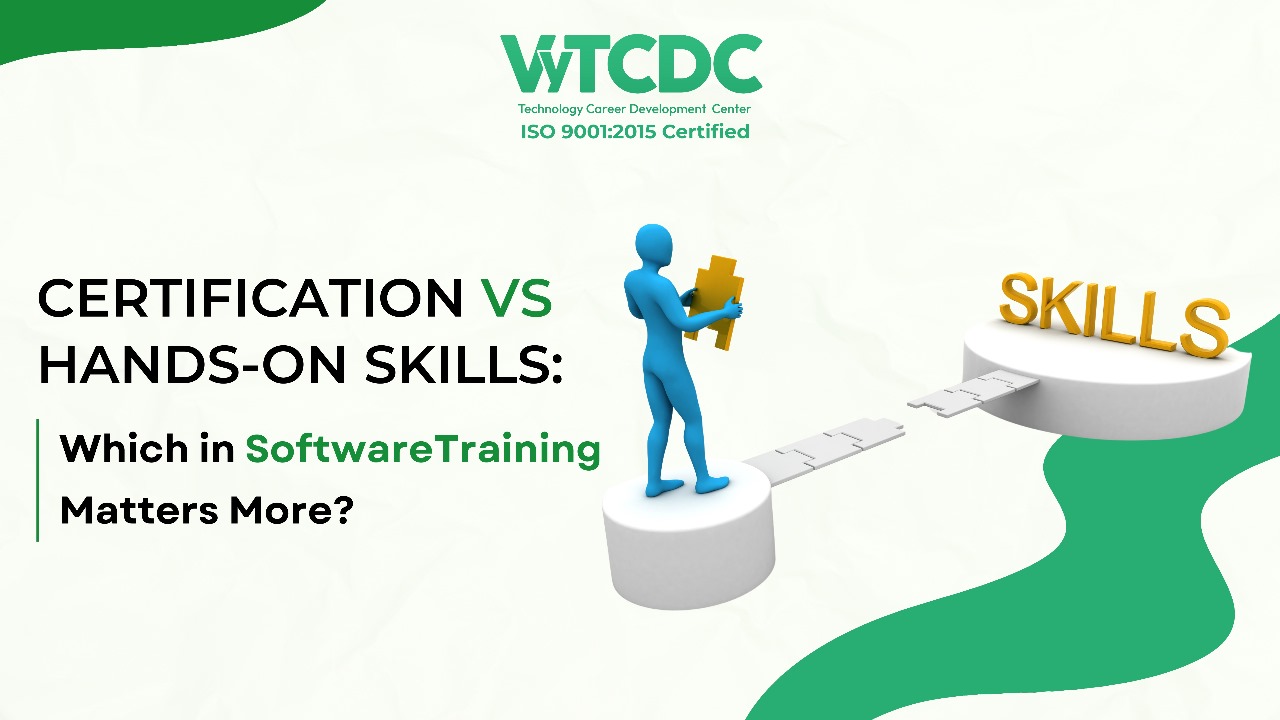
Can a baby learn to walk without first crawling, or should a toddler just go straight to running? While all of the steps in child development are important, software engineers-to-often be asked the question of whether the existence of certifications makes them elementary knowledge or practical skills the prime cause of advance. Understanding the worth of both approaches is necessary for building a bright career in a fast-moving technology field.
What are certifications?
Certifications are the nurturing environment of a baby during its early age. Formal recognitions provided by organizations that are regarded in an industry authenticate the expertise of a person in the relevant aspects of technology. As a baby needs nurturing for foundation skills, certifications provide aspiring developers with structured knowledge of the critical concepts required to thrive in the environment of a software training institute.
Practical Skills in Software Development:
Hands-on practical skills are actual experiences that develop. These are to be given hands-on practice during actual events-in programming, debugging issues, and working in a version control system like Git. Getting involved in project-based training, internship, and coding challenges is just like having the baby’s first steps after taking a fall-any fall helps in confidence and adaptability with which individuals begin their transition in the world of technology that the best institute offering software training in Chennai provides.
Certification Benefits: Why They Still Matter:
Just as the nurturing foundation continues to stay busy in how a child develops, certifications bring about major benefits for the tech industry:
Industry Verification: When people get certified, the world gets to know that coders are competent, thereby enhancing one’s name value in the eyes of potential employers-other than how a parent beams with pride at their child’s accomplishments.
Professional Networks: This is typically awarded by most certification courses, just as the various family members provide advice and support one another.
Career Advancement: When certifications are acquired, it opens further opportunities and a salary can be earned, especially for those individuals who are starting to have career experiences because employers typically pay for formal documentation that a certain body of knowledge is derived from the best training institute.
Benefits of Practical Skills: The Power of Experience Ends:
Certifications form the base, but the depth comes from practical abilities. Among the advantages of practical skills are the following:
Flexibility: As children learn to adapt and, in the process, solve problems, so do humans; for such experience builds flexibility and creative thinking-a fundamental attribute in the unpredictable world of technology.
Practical Application: Through practical ability, developers can find solutions to real-world problems, closing the gap between theory and results, just as a child does by exploring.
Portfolio Development: Having a portfolio of projects and the ability to show some level of experience with coding is kind of like the scrapbook of the milestones. It impresses the would-be employer in most respects.
The Employer's Perspective: Certifications vs. Experience:
This balance between certifications and practical skills becomes every company needs and job roles-specific from an employer’s perspective. Most recruiters point out the difference between valuing candidates with a hands-on approach through portfolios or internships versus appreciating them for certification proof foundational knowledge.
Balancing Certification and Practical Skills: Best Practices:
One should find a balance between certifications and actual experience so as to become a better software developer. How?
Obtain Relevant Certifications: To begin with the most relevant certifications according to the needs of your career vision, lay down a foundation structure.
Hands-on Experience: Gaining exposure through internships, coding boot camps, and personal projects gives one an actual experience in the tech landscape.
Have a Great Portfolio: Here, exhibit your skills and projects to eventually reflect that you are perfect at handling things—just like the way a child displays his/her achievements to loved ones proudly.
Challenges of Relying Solely on Certifications:
Although certificates may enhance your worth in a resume, highly relying on them might leave you with fewer choices. Certificates may become outdated, and due to a lack of hands-on skills, they cannot have problems that may arise in business.
Challenges of Relying Solely on Practical Skills:
On the other side, the practical skill emphasis may hinder the development of the career. Without the required qualification, you will not be able to demonstrate your technical know-how in competitive job markets where employers are interested in verified knowledge.
Conclusion: Which Way Should I Go?
To certify or not to certify- that is the question. Both aspects make up the progress of a software developer. To be recommended to aspiring developers for growth in this competitive, fast-changing industry today, a balanced combination of certifications and hands-on skills is recommended.
Regardless of whether you are shaping your profession through certification, embracing practical skills, or a mix of all, keep in mind that leading keys to success in this world of software development involve continuous learning and adapting.
VyTCDC: Your Partner in Tech Training:
Established in 2002, VyTCDC has been vy ventures’ premier technology incubator since 2002. It offers transformative technical training and internships across its specialized entities. We are the best software training institute in Chennai, and thus train our students for a career in technology both in certifications as well as hands-on applicability.
Contact Us:
Phone: +917338811773 / +918925903732
Email: careers@vytcdc.com