
Are you experiencing the nuisance of dealing with a bird’s nest on your house or property? You know how big of a hassle it can be. So you might wonder how to safely remove a bird’s nest from your porch or garden.
Take all the necessary steps and discourage birds from making nests in unwanted places in your garden, porch, or deck as removing a bird’s nest is a lot of hassle. Whether you’re trying to protect your property or just want to get rid of the mess, this post will provide you with the information you need to tackle the job with confidence.
How to Remove a Bird’s Nest Safely
Check out these 6 steps for bird nest removal. They are helpful for bird enthusiasts and everyone looking to get rid of a pesky bird’s nest for the safety of their home and garden.
1. Check the Local Conversation Law
Are you thinking about how removing a bird’s nest can be illegal??? Sometimes, the law does protect certain species. It’s essential to check local laws before attempting to move or remove a bird or nest.
In the US, the Fish and Wildlife Service protects certain birds, and the Migratory Bird Treaty Act of 1918 prohibits tampering with or taking away an occupied nest. But if the nest is empty or abandoned, it’s okay to relocate or take it away.
2. Gather All the Materials You Need for Removing a Bird’s Nest
Gather your supplies and get ready to wave goodbye to that nest. Don’t forget to wear gloves and a face mask to protect yourself. Make sure to use insecticides and bleach for extra protection. You may also use a ladder to reach those hard-to-reach spots. Here’s a checklist to help you out:
- Scrub brush
- Birdhouse or roost box
- Bird repellent gel
- Animal decoys
- Bird spikes
- Materials to cover holes
- Protective gear such as gloves and a face mask
- Insecticides
- Ladder
- Hand soap
- Bleach
3. Look Inside the Nest for Any Eggs or Chicks
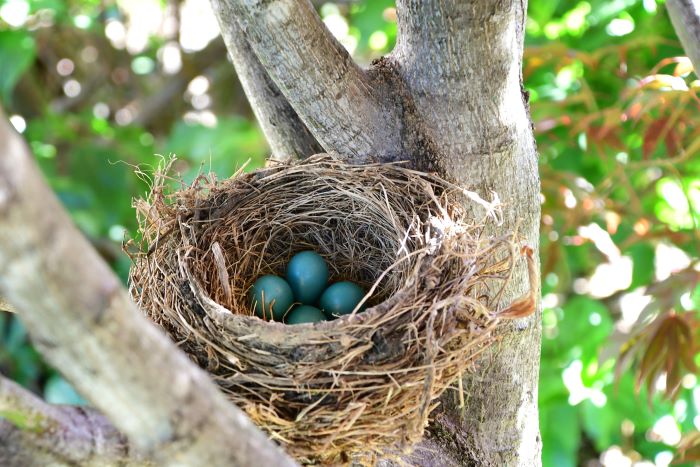
Examine the nest before dismantling it to see if any eggs or young birds are present. Leaving the nest is advisable if there are unhatched eggs or infant birds. A simple thing to remember is just because the nest has eggs and no birds don’t mean they’ve been abandoned.
Some bird species wait to incubate the eggs, or the adults might go to look for food. Observe the nest over a few days at different times to see if anything has changed.
4. Identify Any Hazards or Threats
Wearing protective gloves is a good idea to reduce the risk of coming into contact with any bacteria, parasites, or sharp objects that may be in the nest. Additionally, you should choose a new, secure position for the nest not far from its previous location. This is because if it hasn’t been relocated too far, birds will usually be able to find it.
5. Get Rid of the Nest the Right Way
If you are not planning to relocate the nest, gather and discard it in a trash bag and drop it off in a bin outside. This will help prevent the spread of diseases, as bird droppings and nests can carry harmful bacteria, parasites, ticks, and mites.
To ensure the safety of domestic animals or other critters in the neighborhood, make sure the nest is away from their reach.
6. Consider Hiring a Professional to Remove Birds’ Nests in Tricky Areas
Removal of bird nests with the help of Professionals can be helpful if they are in difficult-to-access places, such as roofs, gutters, or vents. Although it may be tempting to figure out how to get rid of the nest yourself, you may do more damage than good if you don’t know the type of bird that built it.
Also, specialists like bird control services could be beneficial if you need to eliminate starlings, pigeons, or other pesky birds.
Contact us at (209) 832-7300 for efficient and dependable bird exclusion services across Tracy, Tri-Valley, and the Central Valley.